
A PyTorch Package for Learning with Requirements
pip install pishield
pip install pishield
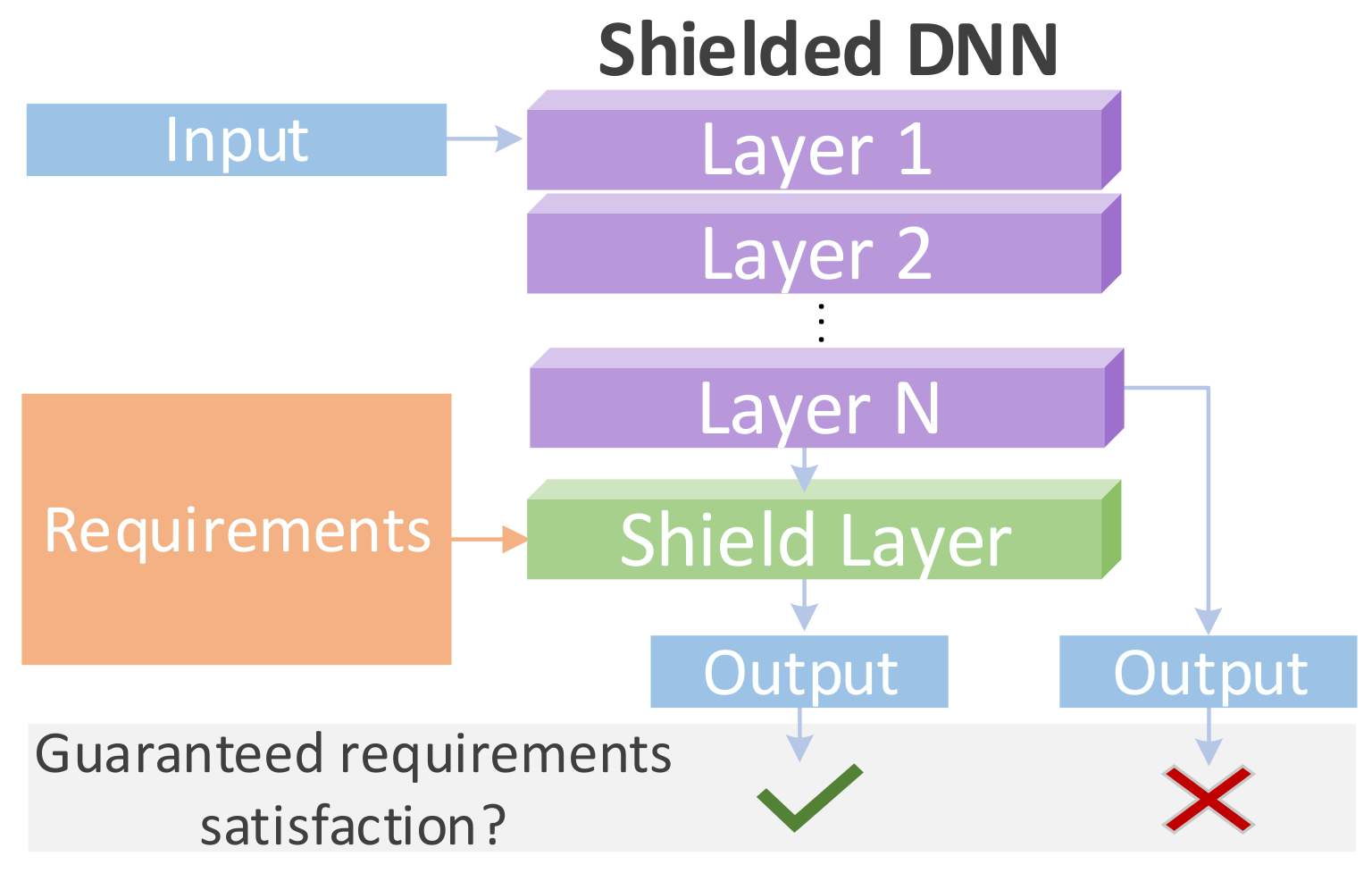
PiShield is the first framework ever allowing for the integration of requirements directly into a neural network's topology.
The integration happens in a straightforward and efficient manner, producing deep learning models that are guaranteed to be compliant with the given requirements — no matter the input.
Requirements can be integrated at inference and/or training time, depending on the practitioners' needs.
PiShield brings together the methods we proposed across several papers — each one contributing to the codebase. (Hover a card to see how it contributes.)
Beyond the Convexity Assumption: Realistic Tabular Data Generation under Quantifier-Free Real Linear Constraints
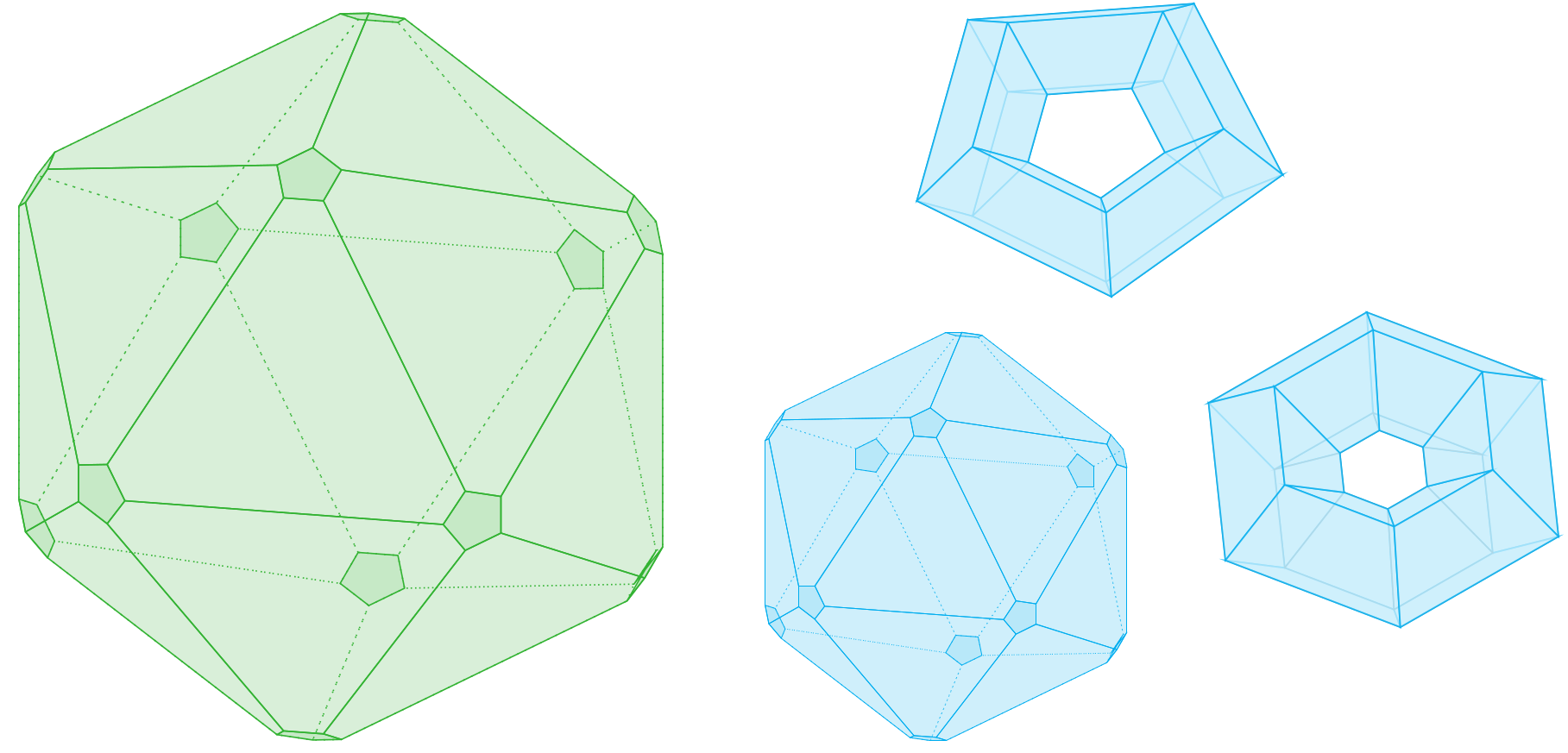
Allows for integrating QFLRA requirements (quantifier-free linear real arithmetic) via a Shield Layer, capturing nonconvex and even disconnected spaces.
arXivHow Realistic Is Your Synthetic Data? Constraining Deep Generative Models for Tabular Data
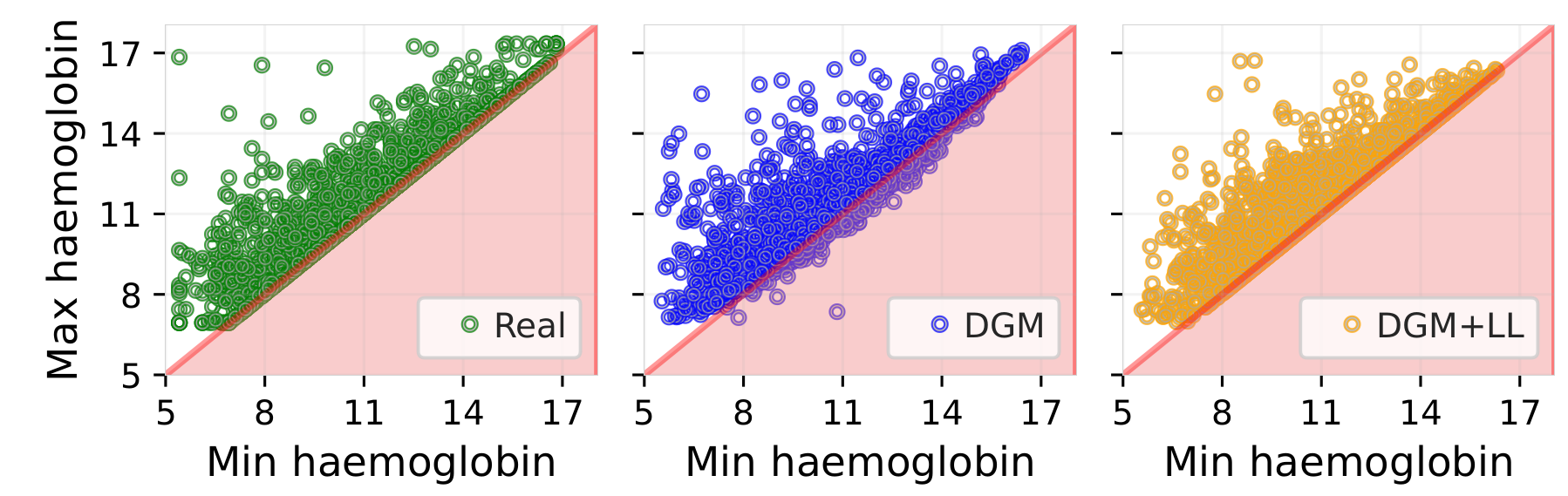
Introduces linear inequality requirements and the Shield Layer for tabular data generation.
arXivCCN+: A Neuro-Symbolic Framework for Deep Learning with Requirements
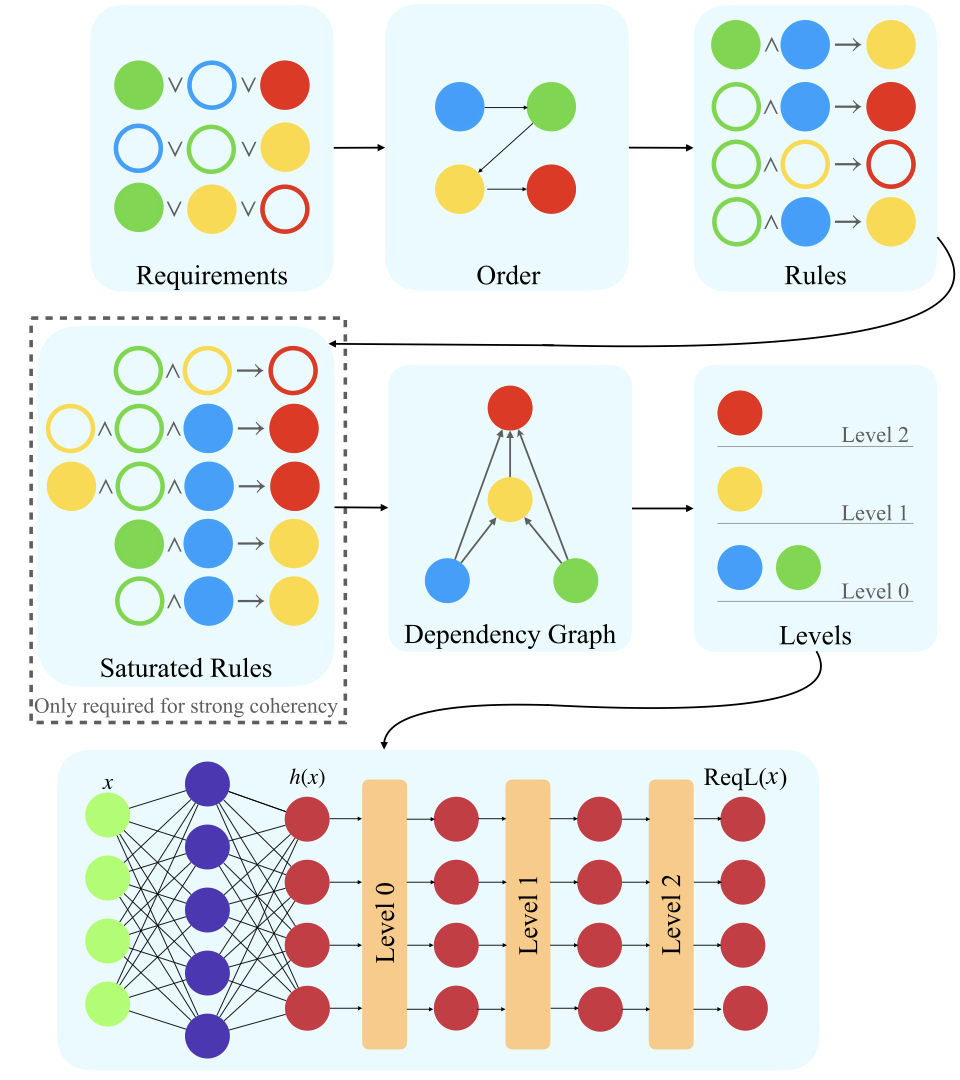
Allows for integrating propositional requirements via a Shield Layer.
PaperExploiting T-norms for Deep Learning in Autonomous Driving
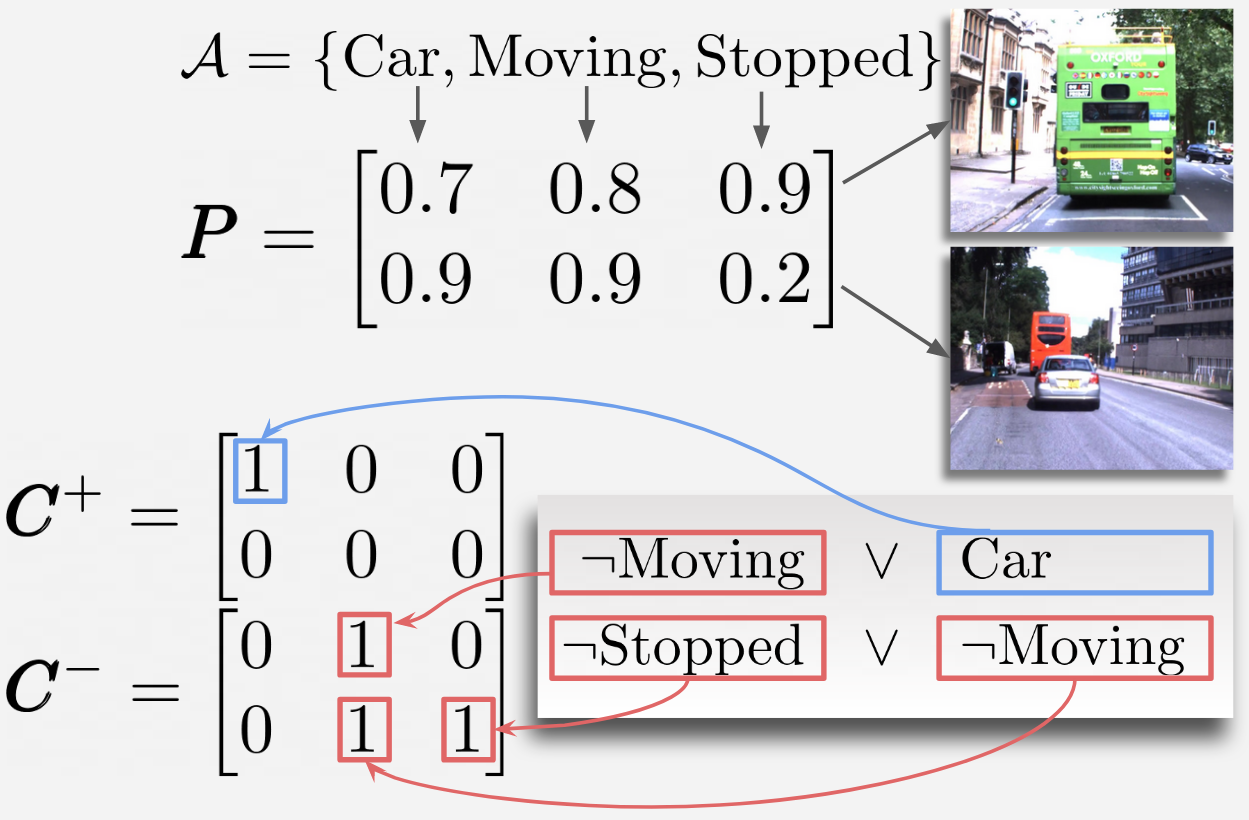
Introduces the memory-efficient t-norm loss that encourages requirement satisfaction at training time.
arXivCoherent Hierarchical Multi-Label Classification Networks
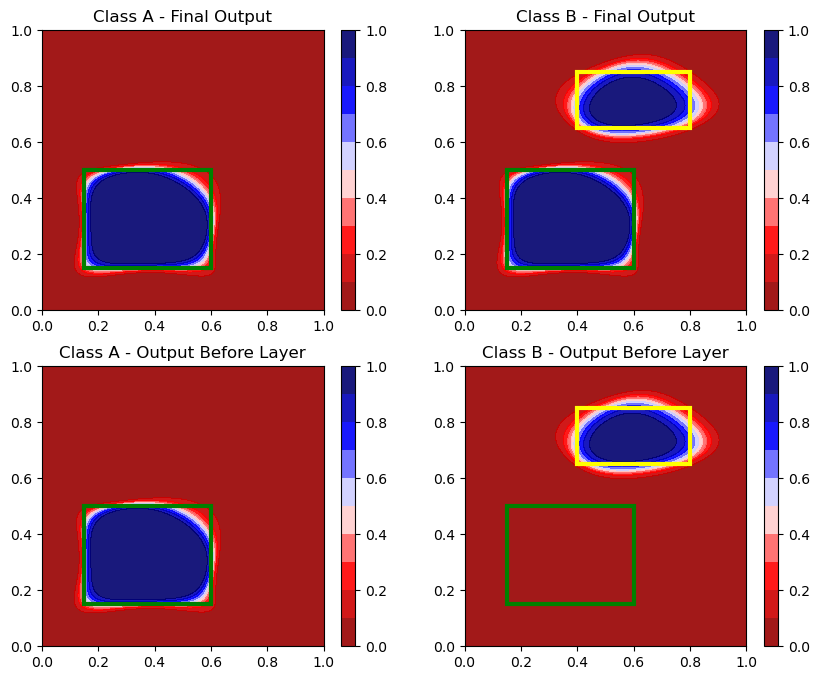
The original constraint layer for hierarchical multi-label classification.
arXivOne layer, three requirement types
A differentiable layer that corrects a model's outputs so they are guaranteed to satisfy the requirements. Usable at both inference and training time.
from pishield.shield_layer import build_shield_layer
layer = build_shield_layer(num_variables, "reqs.txt")
corrected = layer(predictions)
Linear inequality constraints over real variables.
y_0 - y_1 >= 0
Quantifier-free linear real arithmetic: disjunctions and negations of inequalities.
y1 - 2y2 > 0 or neg y3 >= 0
Boolean constraints as Horn rules or disjunctive clauses.
y_0 or not y_1 or y_2
One loss, three t-norms
A memory-efficient t-norm loss inspired by LTN (Logic Tensor Networks) that encourages requirement satisfaction at training time. Pick whichever of the three t-norms — Godel, Product, or Lukasiewicz — best fits your task.
from pishield.shield_loss import build_shield_loss
loss_fn = build_shield_loss(num_variables, "reqs.txt", tnorm_choice="godel")
penalty = loss_fn(preds)Try all three examples in one click — no local setup required.

Correct a network's predictions so they satisfy the requirements.
shield_layer_inference.ipynb →Train a model with a Shield Layer and compare against an unconstrained baseline.
shield_layer_training.ipynb →Encourage requirement satisfaction at training time with a t-norm penalty.
shield_loss.ipynb →Across three domains, models with Shield Layers outperform their standard counterparts.
f-mAP @ IoU 0.5 [2]
| Model | Baseline | Shielded |
|---|---|---|
| I3D | 29.30 | 30.98 |
| C2D | 26.34 | 27.93 |
| RCN | 29.26 | 30.02 |
| RCGRU | 29.24 | 30.50 |
| RCLSTM | 28.93 | 30.42 |
| SlowFast | 29.73 | 31.88 |
| Average | 28.80 | 30.29 |
Averages over 5 models [1]
| Utility ↑ | Detection ↓ | |
|---|---|---|
| Baseline (F1) | 0.430 | 0.910 |
| Shielded (F1) | 0.458 | 0.900 |
| Baseline (wF1) | 0.464 | 0.909 |
| Shielded (wF1) | 0.487 | 0.896 |
| Baseline (AUC) | 0.719 | 0.927 |
| Shielded (AUC) | 0.734 | 0.921 |
Wins in 28/30 cases.
AU(PRC) [3]
| Dataset | Baseline | PiShield |
|---|---|---|
| CELLCYCLE | 0.220 | 0.232 |
| DERISI | 0.179 | 0.182 |
| EISEN | 0.262 | 0.285 |
| EXPRE | 0.246 | 0.270 |
| GASCH1 | 0.239 | 0.261 |
| GASCH2 | 0.221 | 0.235 |
| SEQ | 0.245 | 0.274 |
| SPO | 0.186 | 0.190 |
| Average | 0.225 | 0.241 |
If you use PiShield, please cite:
@inproceedings{ijcai2024p1037,
  title     = {PiShield: A PyTorch Package for Learning with Requirements},
  author    = {Stoian, Mihaela C. and Tatomir, Alex and Lukasiewicz, Thomas and Giunchiglia, Eleonora},
  booktitle = {Proceedings of the Thirty-Third International Joint Conference on
               Artificial Intelligence, {IJCAI-24}},
  publisher = {International Joint Conferences on Artificial Intelligence Organization},
  editor    = {Kate Larson},
  pages     = {8805--8809},
  year      = {2024},
  month     = {8},
  note      = {Demo Track},
  doi       = {10.24963/ijcai.2024/1037},
  url       = {https://doi.org/10.24963/ijcai.2024/1037},
}
Depending on which feature you use, please additionally cite:
[1] M. C. Stoian, S. Dyrmishi, M. Cordy, T. Lukasiewicz, E. Giunchiglia. How Realistic Is Your Synthetic Data? Constraining Deep Generative Models for Tabular Data. ICLR, 2024.
[2] E. Giunchiglia, A. Tatomir, M. C. Stoian, T. Lukasiewicz. CCN+: A neuro-symbolic framework for deep learning with requirements. International Journal of Approximate Reasoning, 2024.
[3] E. Giunchiglia, T. Lukasiewicz. Coherent Hierarchical Multi-Label Classification Networks. NeurIPS, 2020.
[4] M. C. Stoian, E. Giunchiglia. Beyond the Convexity Assumption: Realistic Tabular Data Generation under Quantifier-Free Real Linear Constraints. ICLR, 2025.
[5] M. C. Stoian, E. Giunchiglia, T. Lukasiewicz. Exploiting T-norms for Deep Learning in Autonomous Driving. NeSy, 2023.
[6] S. Badreddine, A. d'Avila Garcez, L. Serafini, M. Spranger. Logic Tensor Networks. Artificial Intelligence, 303, 2022.